| Category | Cost for 1ml (1 Syringe) | Cost for 2ml (2 Syringes) | Market Context (US Clinics & Med Spas) |
| Juvederm Cheek Filler Cost (Voluma XC) | $850 – $1,200 | $1,700 – $2,400 | Premium HA filler; lasts up to 24 months. High demand in Med Spas. |
| Cheek Filler Cost Nashville (TN) | $700 – $950 | $1,400 – $1,900 | Mid-tier market. Competitive pricing compared to coastal cities. |
| Restylane Lyft Cheek Filler Cost | $750 – $1,000 | $1,500 – $2,000 | Top competitor to Juvederm; great for structural lift. |
| Cheek Filler Cost New York / LA | $900 – $1,500 | $1,800 – $3,000 | High-tier metro pricing. Often done by board-certified surgeons. |
| Med Spa Cheek Filler Cost | $600 – $850 | $1,200 – $1,700 | Most common option for standard aesthetic procedures. |
| Plastic Surgeon / Dermatologist Cost | $900 – $1,600 | $1,800 – $3,200 | Higher cost due to advanced facial mapping and medical expertise. |
| Sculptra Cheek Volume Cost (Alternative) | $800 – $1,100 | $1,600 – $2,200 | Not an HA filler; stimulates collagen. Priced per vial, not strictly per ml. |
Country Wise How Much Does Cheek Filler Cost in 2026
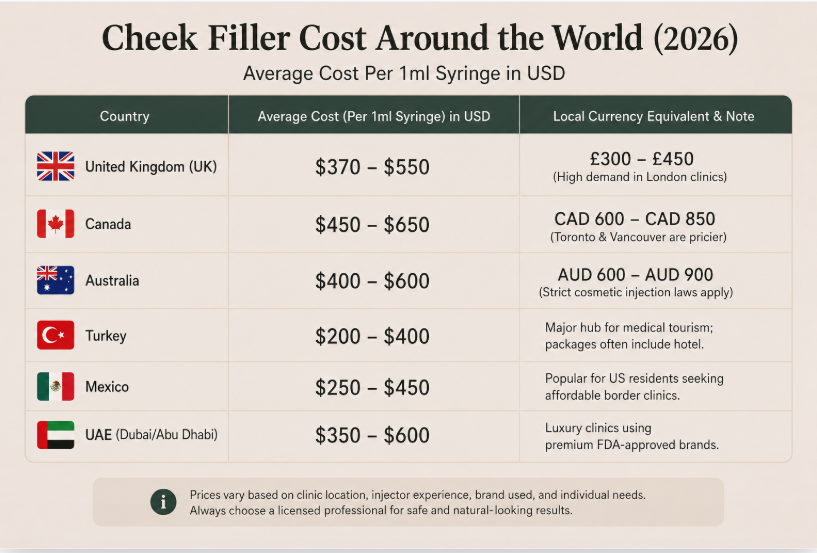
| Country | Average Cost (Per 1ml Syringe) in USD | Local Currency Equivalent & Note |
| United Kingdom (UK) | $370 – $550 | £300 – £450 (High demand in London clinics) |
| Canada | $450 – $650 | CAD 600 – CAD 850 (Toronto & Vancouver are pricier) |
| Australia | $400 – $600 | AUD 600 – AUD 900 (Strict cosmetic injection laws apply) |
| Turkey | $200 – $400 | Major hub for medical tourism; packages often include hotel. |
| Mexico | $250 – $450 | Popular for US residents seeking affordable border clinics. |
| UAE (Dubai/Abu Dhabi) | $350 – $600 | Luxury clinics using premium FDA-approved brands. |
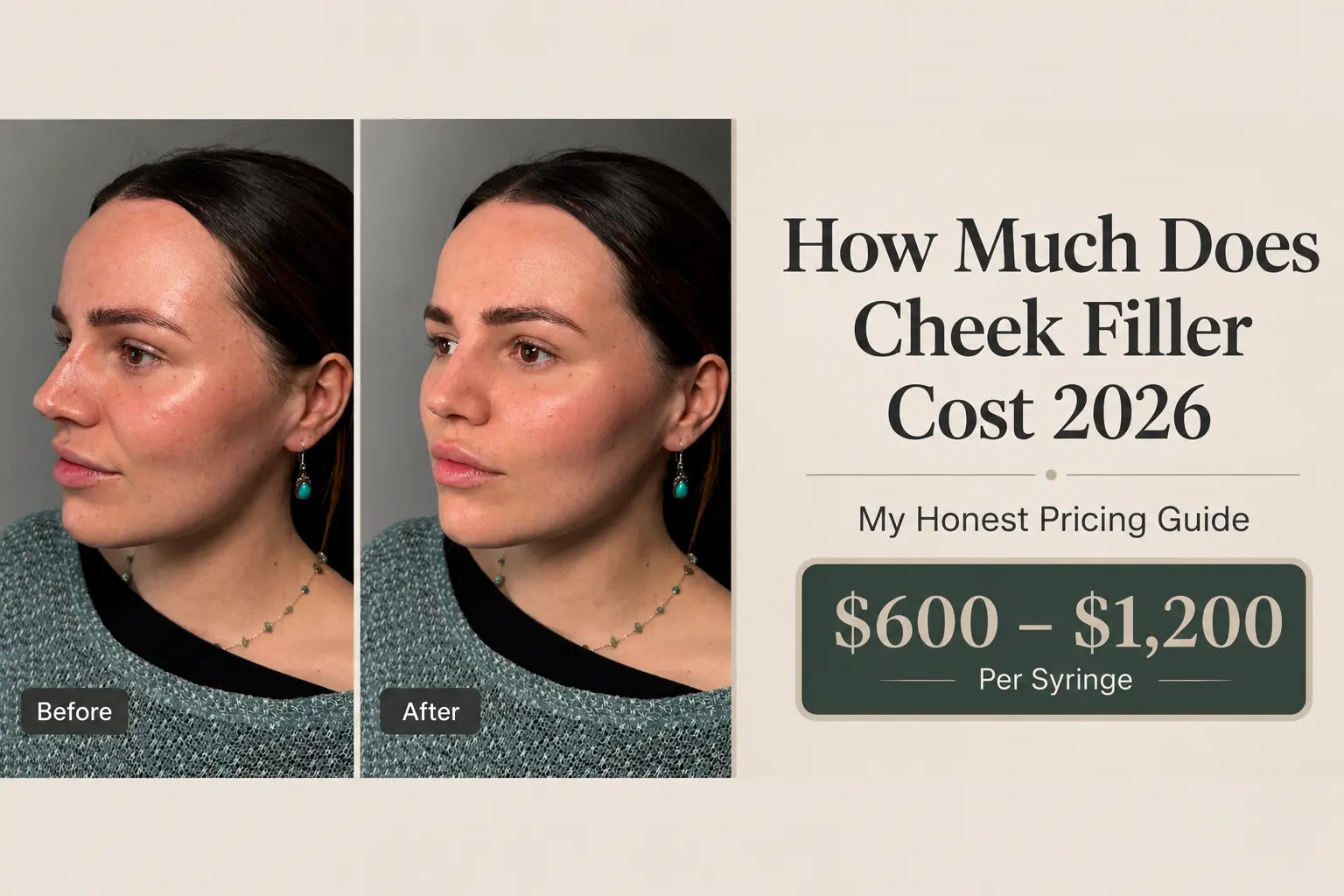
You can expect cheek filler to cost roughly $600 to $1,200 per treatment session, though some clinics charge as little as $500 or as much as $2,000 per syringe depending on the product and provider. If you want a quick estimate, plan for one to two syringes at most appointments and expect results to last about 12–18 months, which helps you compare price versus longevity.
This post will show how location, provider skill, brand choice, and extra fees shape the final bill so you can budget smartly. You’ll learn where prices vary, what hidden costs to watch for, and how to pick a qualified provider who gives safe results without overpaying.
Average Price Ranges in 2026
Expect most cheek filler treatments to cost between about $600 and $1,500 per syringe. Your total will depend on where you get treated, the clinic’s expertise, and how much product you need.
Typical Costs in Different Locations
Prices vary by city and region. Larger urban centers and high-cost states often charge $800–$1,500 per syringe, while smaller towns and lower-cost states can run $600–$900 per syringe.
Clinic overhead and local demand drive these differences. For example, a major metro clinic may include higher rent and staffing costs in the price. Rural or suburban clinics may charge less but confirm the provider’s experience before choosing solely on price.
Travel and follow-up visits can add to your total expense. If you plan to travel for treatment, include transport and possible lodging in your budget.
Comparison by Clinic Type
You’ll pay different amounts depending on the clinic and provider. Typical ranges:
- Medical spa or aesthetic clinic: $600–$1,200 per syringe.
- Board-certified plastic surgeon or dermatologist: $800–$1,500 per syringe.
- Discount clinics or injectors with less experience: $400–$700 per syringe (approach with caution).
Higher prices often reflect advanced training, better safety protocols, and use of premium filler brands. Lower prices may mean less experience or cheaper products. Ask about provider credentials and complication protocols when comparing options.
Price Differences by Amount Used
Most treatments use 1–2 syringes per side depending on your goals. Common totals:
- 1 syringe total: $600–$1,500.
- 2 syringes total: $1,200–$3,000.
- 3–4 syringes (for more dramatic volume): $1,800–$6,000.
Syringe pricing sometimes drops for multi-syringe packages, but verify product type and expertise. Results last about 12–18 months for hyaluronic acid fillers, so plan for maintenance costs when budgeting.
If you’re unsure how these syringe amounts actually translate visually, check real cheek filler before and after results by 1ml, 2ml, and full-face transformations to see what each level of volume looks like.
Factors Influencing Cost
Several clear factors drive how much you’ll pay: who injects you, what filler they use, and how complex your face and goals are. Each of these affects the number of syringes, time in clinic, and the risk profile that the provider manages.
Provider Experience and Reputation
Your injector’s training and track record change price a lot. Board-certified plastic surgeons and dermatologists usually charge more per syringe than less-experienced injectors because they carry extra training and handle complications more confidently. Clinics with long reputations or high demand often add a premium for perceived safety and better results.
You should check credentials, before-and-after photos, and patient reviews. Ask about complication rates and whether the provider treats filler-related problems, such as lumps or vascular issues. A higher fee can mean fewer follow-up surprises, which can save money and stress later.
Type of Filler Material
Different filler brands and formulas cost different amounts. Hyaluronic acid (HA) fillers are common and priced per syringe; thicker, longer-lasting HA gels for cheek projection cost more than softer HA used for fine lines. Non-HA options like calcium hydroxylapatite or poly-L-lactic acid have different price points and longevity, which affects what you pay up front and how often you need touch-ups.
Ask which product the clinic plans to use and why. Some brands are engineered for lift and last 12–24 months; others give subtle volume that fades sooner. Knowing expected longevity helps you compare a higher initial price vs. lower cost but more frequent treatments.
Complexity of Individual Needs
Your anatomy and goals determine how many syringes and how long the procedure takes. Thin faces, significant asymmetry, or prior surgery often require more product and a more skilled injector, which raises cost. Targeting multiple areas (cheeks plus tear troughs or jawline) increases total syringes and appointment time.
You may need an initial correction followed by a maintenance plan. If you have scar tissue or prior filler, your provider might use more advanced techniques, imaging, or staged treatments; these add fees. Get a personalized treatment plan with estimated syringes and follow-up costs before you commit.
Geographic Variations in Pricing
Location drives most price differences. You’ll pay more where rent, wages, and local demand are higher, and less where costs of running a clinic are lower.
Urban Versus Rural Differences
In major cities you can expect higher per-syringe prices and larger clinic fees. Clinics in downtown areas often charge $800–$1,500 per syringe because of high rent, licensed staff costs, and stronger demand for cosmetic services. You may also see premium pricing for experienced injectors and boutique clinics.
In rural areas prices often fall below urban averages. You might find syringes for $500–$900 and lower facility fees. However, fewer providers can mean limited product choices and less access to highly experienced injectors. Travel time and the need for follow-up visits can offset initial savings.
Regional Trends in Filler Costs
Coastal and metro regions generally list higher average costs compared with inland and less populated states. States with high cost of living and concentrated aesthetic markets—like parts of California, New York, and Florida—tend to push prices up. Clinic competition in those regions can, at times, create package deals or promotions.
Midwest and smaller-state markets usually show lower baseline prices but greater variation between providers. Pricing can also change seasonally: busy cosmetic seasons (spring/summer) sometimes raise demand and short-term prices. Compare quotes from multiple clinics in your region and ask about product brand and total volume to get a clear price picture.
Breakdown of Fees
You will see costs for the visit itself, the product, and any extra services you choose. Knowing typical price ranges helps you plan and compare clinics.
Consultation Charges
Consultations can be free or range from $25 to $150 depending on the clinic and injector. Many medspas waive the fee if you proceed with treatment the same day. A paid consult often includes a facial exam, treatment plan, and written estimate.
During the consult, ask whether the price covers photos, mapping, and a written consent form. If the injector is a specialist (plastic surgeon or dermatologist), expect higher consult fees but more detailed planning. Keep receipts and a copy of the plan for future visits.
Follow-Up Appointment Costs
Follow-ups are often included for a set period, commonly 2–4 weeks after the injection. If your clinic offers a free touch-up within that window, it usually applies only for under- or overcorrection, not new treatment goals.
Outside the included window, touch-ups or corrections typically cost between $100 and $400, depending on how much filler you need. If complications arise and require dissolving filler with hyaluronidase, labs and medication may add $150–$500 or more. Confirm follow-up policies and any extra fees before you book.
Additional Service Fees
Expect extra charges for the filler product itself, usually billed per syringe. Prices per syringe vary from about $600 to $1,200 based on brand and location. Some clinics offer package pricing for multiple syringes or combined procedures.
Other common add-ons: topical numbing ($0–$50), local anesthetic injections ($50–$150), and post-care supplies like ice packs or ointment ($5–$30). If you want complementary treatments—like neuromodulators, laser, or skin boosters—those carry separate fees. Always get a written breakdown showing itemized costs so you can compare clinics easily.
Insurance and Financing Options
Most health insurance plans do not pay for cosmetic cheek fillers, but exceptions exist for reconstructive needs. Clinics often offer payment plans, credit options, or third-party financing to spread costs over time.
What Insurance May Cover
Insurance may cover injectable treatments only when they treat a medical or reconstructive problem. Examples include restoring volume after trauma, treating congenital facial defects, or addressing deformities from surgery. You must have clear medical documentation and a physician’s note stating the treatment is medically necessary.
Coverage rules vary by insurer and plan. Expect pre-authorization requirements, denial risk for cosmetic claims, and possible out-of-pocket costs like deductibles or co-pays. Call your insurer with specific billing codes (ask the clinic for these) before scheduling to avoid surprise bills.
Financing Plans Provided by Clinics
Many clinics accept major credit cards and offer in-house payment plans that let you split the total into several monthly payments. Typical options include 3–12 month interest-free plans or longer-term plans with interest. Ask for the exact APR, monthly payment, and any setup or late fees.
Third-party medical lenders like CareCredit or Klarna are common. They require a credit check and may offer promotional financing. Compare offers: check interest rate, repayment period, and total cost. Get all terms in writing before committing.
Comparing Brands and Products
You’ll see price differences tied to brand, filler type, and how long results last. Some fillers cost more per syringe but may last longer or need fewer touch-ups.
Popular Brands and Price Points
Common hyaluronic acid fillers for cheeks include Juvederm Voluma, Restylane Lyft, and Belotero.
- Juvederm Voluma often costs toward the higher end per syringe. It’s marketed for deeper cheek support.
- Restylane Lyft usually sits in the mid-to-high price range and is also used for cheek projection.
- Belotero tends to be less common for deep cheek lifts and may be priced lower per syringe.
Price per syringe typically ranges from about $500 to $1,500 depending on city and provider. Most patients need 1–2 syringes for noticeable cheek enhancement. Always check whether listed prices include the provider fee or only the product cost.
Differences in Longevity and Value
Longevity varies by product and placement. Voluma and Lyft commonly last 12–24 months when placed deeply in the cheek. Softer gels may last 6–12 months when used superficially.
Think about cost per year rather than cost per syringe. A pricier filler that lasts 18–24 months can be better value than a cheaper option that needs repeat treatments every 6–9 months. Ask your provider about expected durability for your anatomy and whether touch-ups or dilution affect results and price.
Package Deals and Promotions
You can often save by buying multiple sessions or using seasonal and new-client offers. Read promotion fine print for injector skill, product brand, and expiry dates so you know exactly what you’re paying for.
Multi-Session Pricing
Many clinics sell packages of 2–4 treatments at a reduced per-syringe rate. For example, a single session that costs $800 may drop to $700 per session in a two-visit package. Packages may cover touch-ups, maintenance, or staged volume buildup.
Ask whether the price applies to the same filler brand and whether a single injector must perform all sessions. Check refund, transfer, and expiry policies; some clinics set a 6–12 month use window. Confirm whether pre-treatment consults, follow-up visits, or complication management are included or billed separately.
Seasonal and New Client Discounts
Clinics run discounts around holidays, summer, and slower months; these can be $50–$200 off a session or a fixed-percentage discount. New client specials often include a lower per-syringe price or bundled add-ons like a free consult or small touch-up.
Verify that the discounted service uses the same quality filler and an experienced injector. Watch for limits such as first-time-only, non-combinable offers, or minimum purchase requirements. Always get the offer terms in writing before booking.
Expected Longevity Versus Expense
You’ll balance how long results last with how much you pay. Think about product type, amount used, and how often you want maintenance.
Typical Duration of Results
Hyaluronic acid (HA) cheek fillers usually last 6 to 18 months depending on the product and placement. Thicker, cross‑linked HA designed for deep cheek support tends to persist longer—often 12 to 18 months—while softer formulations may fade closer to 6–9 months.
Your metabolism, age, and activity level affect breakdown speed. If your provider injects 1–2 syringes per cheek, expect more visible longevity than with a single syringe. Touch‑ups every 9–12 months are common to keep shape and volume consistent.
It’s also important to understand that longevity and final results depend on how well the filler settles in your tissue. Here’s a complete guide on how long cheek filler takes to settle and when you’ll see final results.
Long-Term Value Considerations
Compare cost per syringe to how often you’ll repeat treatment. A $700 syringe that lasts 12 months effectively costs about $58 per month. A more expensive, longer‑lasting product can lower yearly cost if it doubles the interval between treatments.
Factor in provider skill and complication rates. Paying more for an experienced injector can reduce risk of revision or uneven results, which saves money and time later. Also consider loyalty discounts, package pricing, and non‑filler alternatives like fat grafting if you want a longer‑term solution.
Potential Additional Costs
You may pay more than the upfront injector fee. Expect costs for repeat treatments, possible medications, and any corrective work if complications occur.
Follow-Up Treatments
Cheek filler is temporary. Most hyaluronic acid fillers last about 6–18 months depending on product and metabolism. Plan for repeat treatments if you want to keep the result. Typical follow-up volume is 0.5–2.0 mL per side, so each session can cost another $600–$2,000 depending on syringe price and clinic rates.
Some providers offer maintenance plans or discounts for repeat sessions. Ask whether touch-ups within a set time (often 2–4 weeks) are included. Also check cancellation and rescheduling fees. Budget for at least one yearly visit if you prefer a maintained look.
Managing Side Effects
Minor swelling, bruising, and tenderness are common and usually resolve in days to weeks. Over-the-counter pain relievers, cold packs, and arnica may help; these items add small costs. If you develop prolonged swelling, lumps, or signs of infection, you might need clinic visits, prescription antibiotics, or hyaluronidase to dissolve filler. Hyaluronidase treatments range widely but can cost several hundred dollars per session.
Serious vascular complications require immediate care and possibly multiple interventions. Ask your injector about emergency fees and whether those treatments are included in your price or billed separately. Keep a small emergency budget in case corrective care is needed.
How to Choose a Qualified Provider
Focus on the provider’s training, experience with cheek filler, and the clinic’s safety practices. Check certifications, view before-and-after photos, and confirm the clinic follows clean injection and emergency protocols.
Evaluating Credentials
Look for a licensed medical professional such as a board-certified plastic surgeon, dermatologist, or experienced nurse injector supervised by a physician. Verify licenses and board certifications on state medical board websites.
Ask how many cheek filler procedures they perform each month and request before-and-after photos of patients with similar facial anatomy to yours. Read recent patient reviews on independent sites, not just the clinic’s page.
Discuss the exact brand of filler they plan to use and why. Experienced injectors will explain product choice, volume needed, and expected longevity. If the provider avoids specifics or pressures you to buy packages, consider a second opinion.
Importance of Safety Standards
Confirm the clinic is a licensed medical facility, not a spa without medical oversight. The treatment area should be clean, well-lit, and set up for sterile injections.
Ask about emergency protocols: availability of hyaluronidase for hyaluronic acid reversals, access to oxygen, and a plan for vascular occlusion or allergic reaction. Make sure they take medical history and discuss medications like blood thinners before injection.
Ensure they use single-use, sealed syringes and new needles for each injection. A provider who documents photos, consent forms, and a detailed aftercare plan shows professional standards and care for your safety.
Disclaimer: This article is for informational purposes only. While actual cheek filler prices may vary depending on the specific clinic, provider, and your location, the cost estimates provided here are based on thorough and up-to-date market research to give you the most accurate baseline possible. Always consult with a qualified professional for an exact quote.
References
- U.S. Food and Drug Administration (FDA): FDA-Approved Dermal Fillers: Safety, Usage, and What to Expect.
- National Institutes of Health (NIH) / PubMed: Clinical Efficacy and Longevity of Hyaluronic Acid Dermal Fillers.
- Medicare.gov (U.S. Government Medical Coverage): Official Medicare Coverage Guidelines for Cosmetic and Reconstructive Procedures

Sophia Bennett is a dedicated aesthetic researcher and patient advocate with years of experience evaluating cosmetic treatments. Driven by a strict commitment to safety and transparency, she provides readers with evidence-based insights, authentic before-and-after expectations, and crystal-clear cost guides to help them make confident, informed decisions.
[…] number of syringes you need directly impacts your total price—see our full guide on cheek filler cost by ML, city, and clinic type to understand real-world pricing in […]
[…] A lower price is not always a good deal. Cheap filler from an unqualified injector carries real risks — vascular occlusion (blocking a blood vessel) is a rare but serious complication that requires immediate reversal. An experienced injector knows how to avoid it and how to treat it if it occurs. For a full breakdown of what affects pricing and what to budget in your country, see our detailed guide on how much cheek filler costs in 2026. […]